Best Countertop & Pitcher Filters 2026: Expert Picks
We evaluated 4 countertop and pitcher filters across filtration quality, capacity, ongoing filter costs, and ease of use. Whether you need a budget-friendly pitcher for basic chlorine reduction or a countertop reverse osmosis system that eliminates 99% of dissolved contaminants, our picks cover every budget and need.
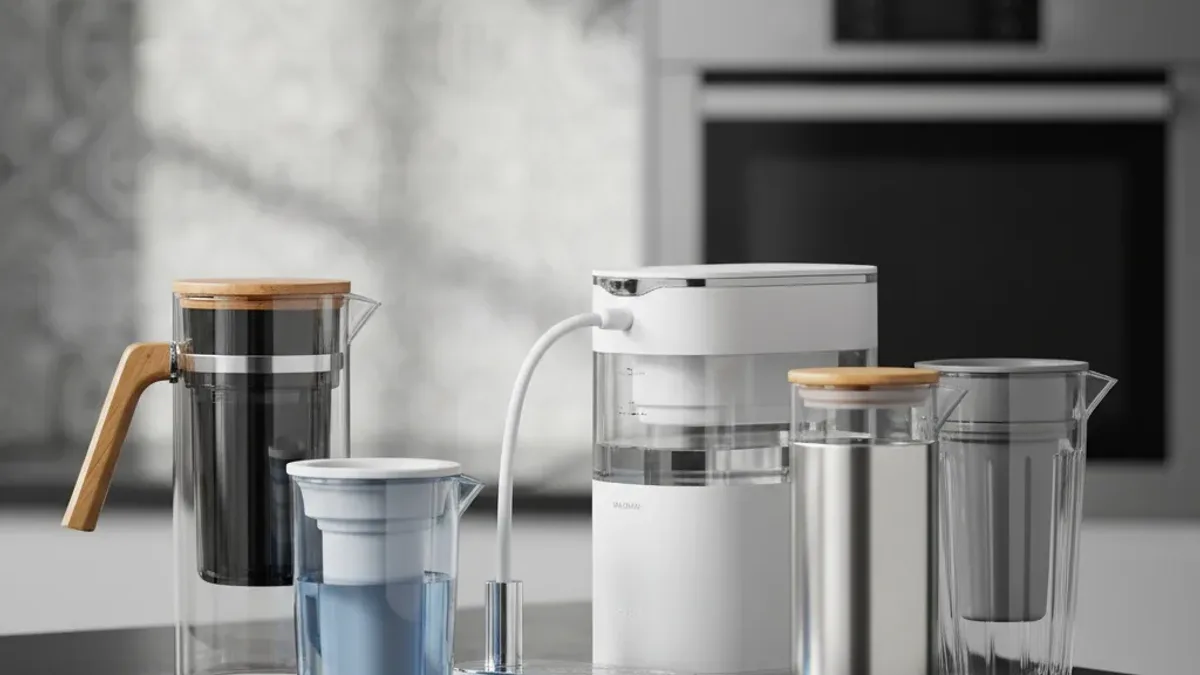
Quick Picks: Our Top Recommendations
| Feature | Editor's Pick Bluevua RO100ROPOT-UV Countertop Reverse Osmosis System | Bluevua RO100ROPOT-Lite(UV) Countertop Reverse Osmosis System | Amazon Basics 10-Cup Water Filter Pitcher | Brita UltraMax 27-Cup Water Filter Dispenser |
|---|---|---|---|---|
| Price Range | $250–$500 | $100–$250 | Under $25 | $25–$50 |
| Stages | 6 | 7 | 2 | 2 |
| Technology | Reverse Osmosis + UV + Remineralization | Reverse Osmosis + UV + Remineralization | Activated Carbon + Ion Exchange | Activated Carbon + Ion Exchange |
| Capacity | 0.75 gallons per cycle | 0.75 gallons per cycle | 10 cups (2.4 liters) | 27 cups (6.3 liters) |
| Flow Rate | ~0.5 GPM | ~0.4 GPM | — | — |
| Micron Rating | 0.0001 | 0.0001 | — | — |
| Filter Life | 12 months (RO membrane), 6 months (other filters) | 12 months (RO membrane), 6 months (other filters) | 40 gallons (~2 months) | 40 gallons / 2 months (Standard), 120 gallons / 6 months (Elite) |
| Check Price | Check Price | Check Price | Check Price |
We weighted filtration quality (40%), value for money (25%), ease of use (20%), and ongoing filter costs (15%). A $24 pitcher that handles chlorine well can outrank a $300 RO system if the buyer only needs basic taste improvement.
1. Bluevua RO100ROPOT-UV Countertop Reverse Osmosis System — Best Premium Countertop RO
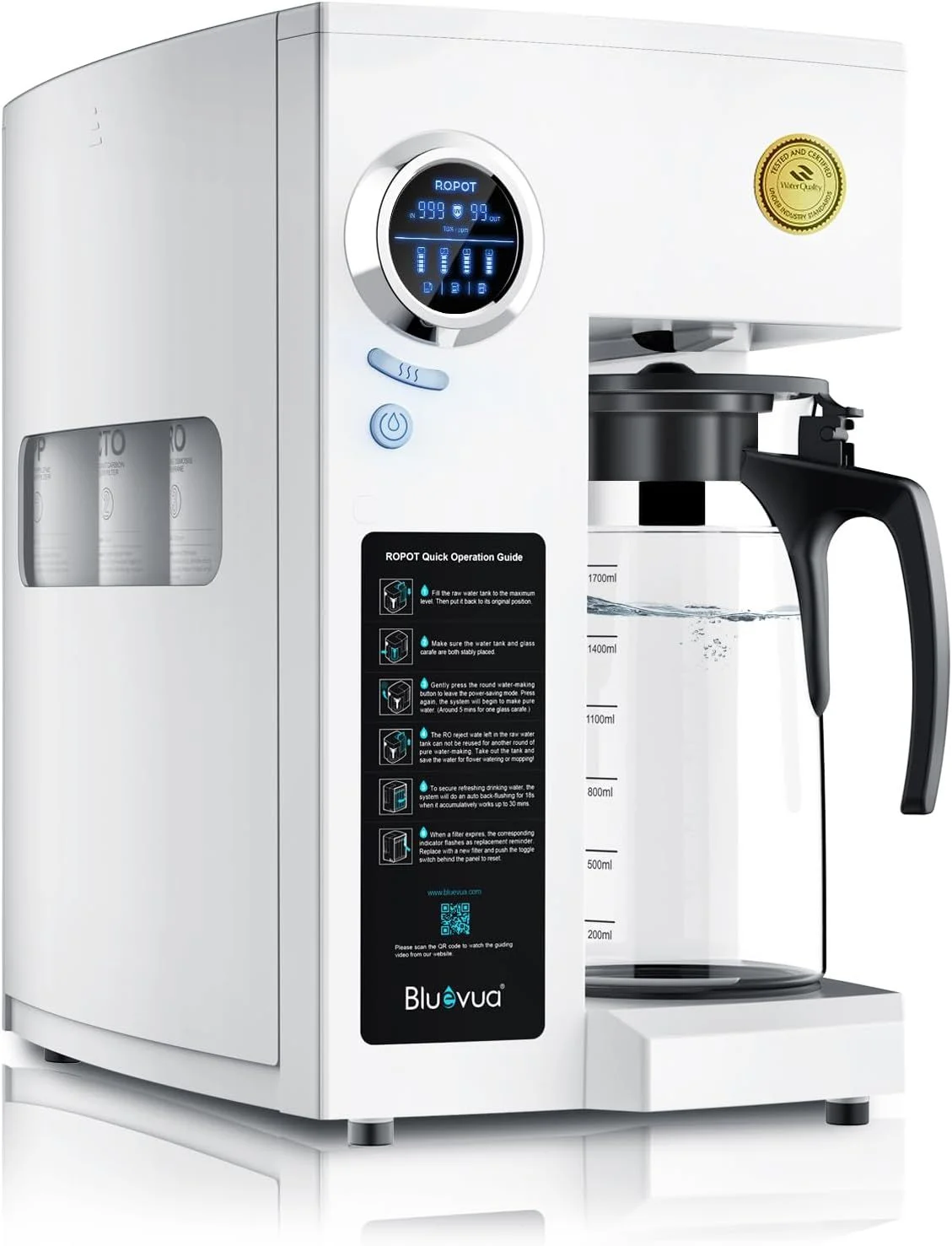
The Bluevua RO100ROPOT-UV earns our top spot as the most capable countertop filtration system you can buy. Its 6-stage reverse osmosis process paired with UV-C sterilization eliminates bacteria, viruses, heavy metals, fluoride, and PFAS that no pitcher filter can touch. The glass carafe is a thoughtful detail that keeps purified water free from plastic contact.
At $317, this is a serious investment for a countertop unit. But if your water quality report shows elevated lead, high TDS, or detectable PFAS levels, the RO100ROPOT-UV delivers peace of mind that a $25 pitcher simply cannot. The 2:1 pure-to-drain ratio is efficient for an RO system, and the zero-installation design means renters can take it with them when they move.
The main trade-off is speed and counter space. Filtering a full carafe takes several minutes, and the unit has a substantial footprint. For a household that drinks large volumes of water quickly, an under-sink RO system with a tank may be more practical. But for 1-3 person households who prioritize water purity above all else, this is the gold standard.
- UV sterilization kills 99.99% of bacteria and viruses
- 6-stage filtration including remineralization for better taste
- Elegant glass carafe — no plastic contact with purified water
- Premium price at $317 — significant investment for countertop unit
- Takes up considerable counter space
2. Bluevua RO100ROPOT-Lite(UV) Countertop Reverse Osmosis System — Best Value Countertop RO
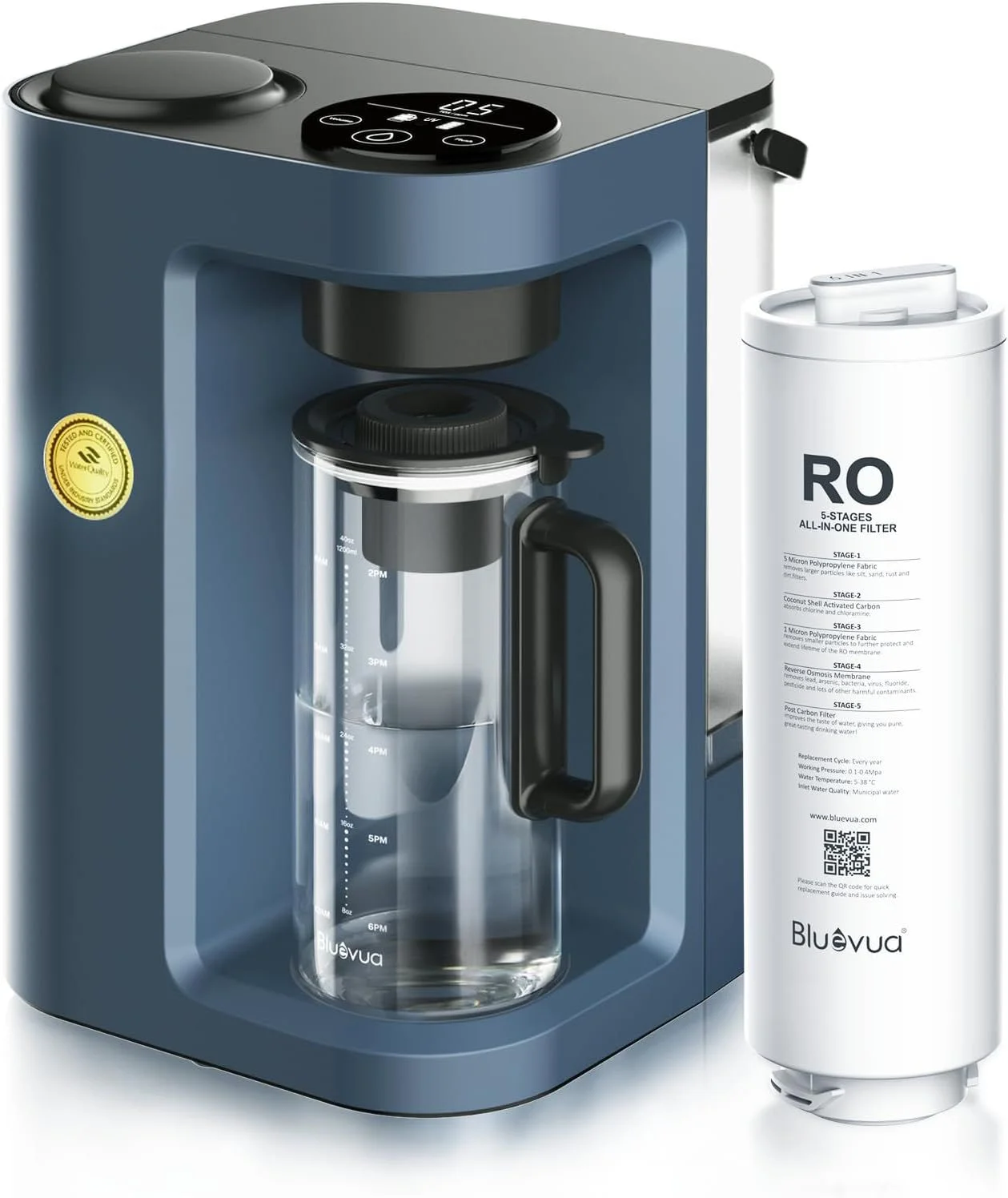
The Lite UV model delivers roughly 90% of the premium Bluevua's performance at about 70% of the price. You still get UV sterilization, reverse osmosis, remineralization, and a glass carafe. The addition of a smart LED display showing filter life and water quality is actually a feature the premium model lacks.
The key compromise is water efficiency: the Lite UV has a 3:1 pure-to-drain ratio versus the premium's 2:1. Over a year, that adds up to more wasted water. Filtering speed is also slightly slower. But at $219, you are getting countertop RO with UV for about $100 less, which makes this the better pick for most budget-conscious buyers who still want serious filtration.
If you are choosing between these two Bluevua models, the Lite UV is the smarter buy unless your water bill makes the 3:1 waste ratio a real concern, or you want the absolute fastest countertop RO filtering speed.
- 7-stage filtration with UV at nearly $100 less than the full RO100
- Smart LED display shows filter life and water quality
- Glass carafe keeps water free from plastic leaching
- Less efficient 3:1 pure-to-drain ratio wastes more water
- Slower filtering speed than the premium model
3. Amazon Basics 10-Cup Water Filter Pitcher — Best Budget Pitcher
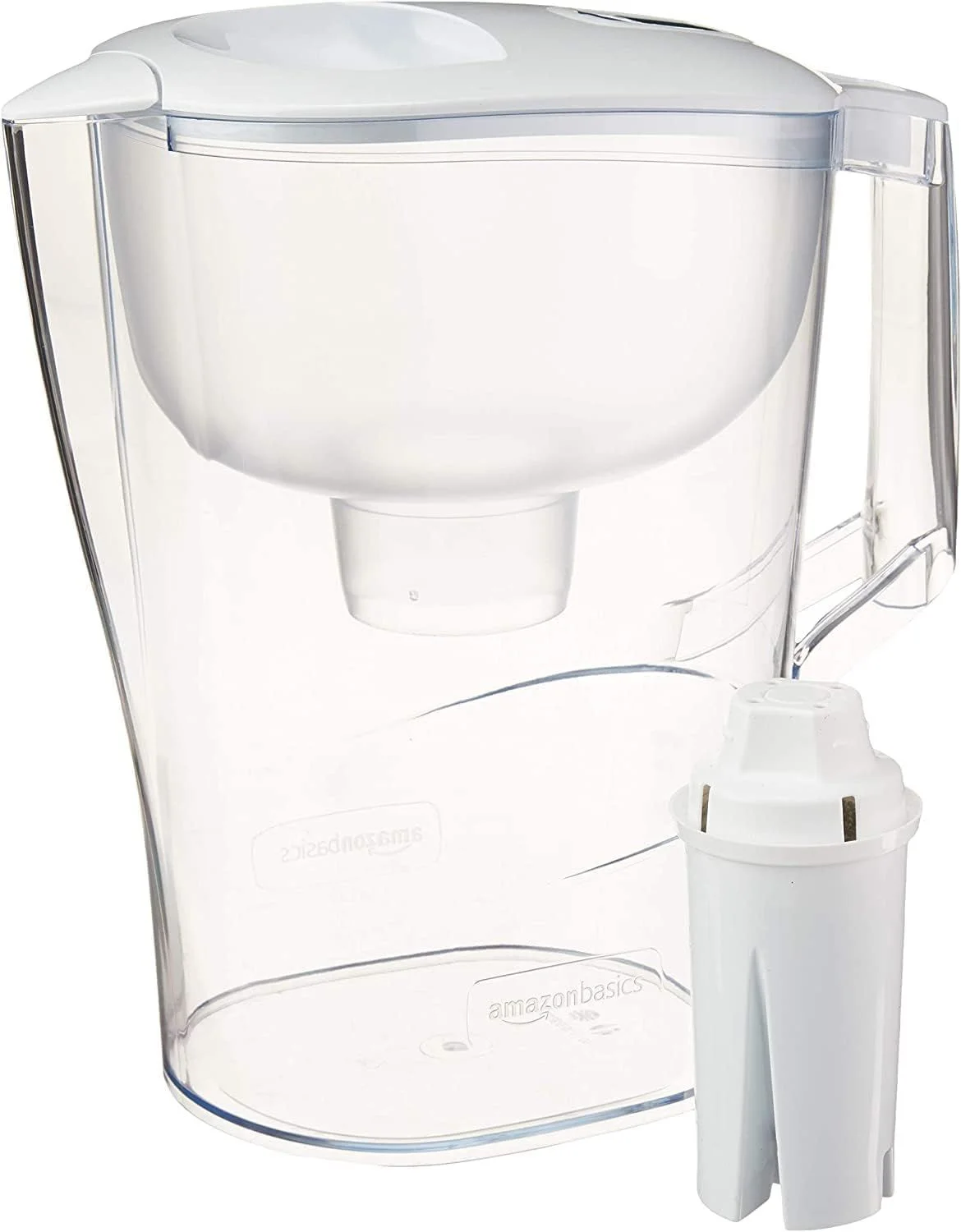
At $23.64, the Amazon Basics pitcher is the lowest-cost path to NSF-certified water filtration. It does the basics well: chlorine taste and odor reduction, mercury, copper, and cadmium removal, all verified by NSF 42/53 testing. The electronic filter change indicator is a nice touch that removes the guesswork around replacement timing.
The trade-offs are exactly what you would expect at this price. Filtering is slow (8-10 minutes for a full pitcher), the design feels utilitarian rather than premium, and the lid seal is not as tight as Brita or PUR pitchers. More importantly, it does not remove TDS, lead, or PFAS — for those contaminants, you need to step up to a RO system or at minimum a Brita Elite filter.
This is our recommended starting point for anyone new to water filtration or on a tight budget. It is compatible with inexpensive Brita Standard filters, keeping ongoing costs minimal.
- Unbeatable price at under $24 — cheapest NSF-certified pitcher
- Compatible with Brita Standard and generic filters for cheap refills
- Electronic filter change indicator removes guesswork
- Slow filtering speed — takes 8-10 minutes for a full pitcher
- Basic design feels less premium than Brita or PUR
4. Brita UltraMax 27-Cup Water Filter Dispenser — Best for Large Families
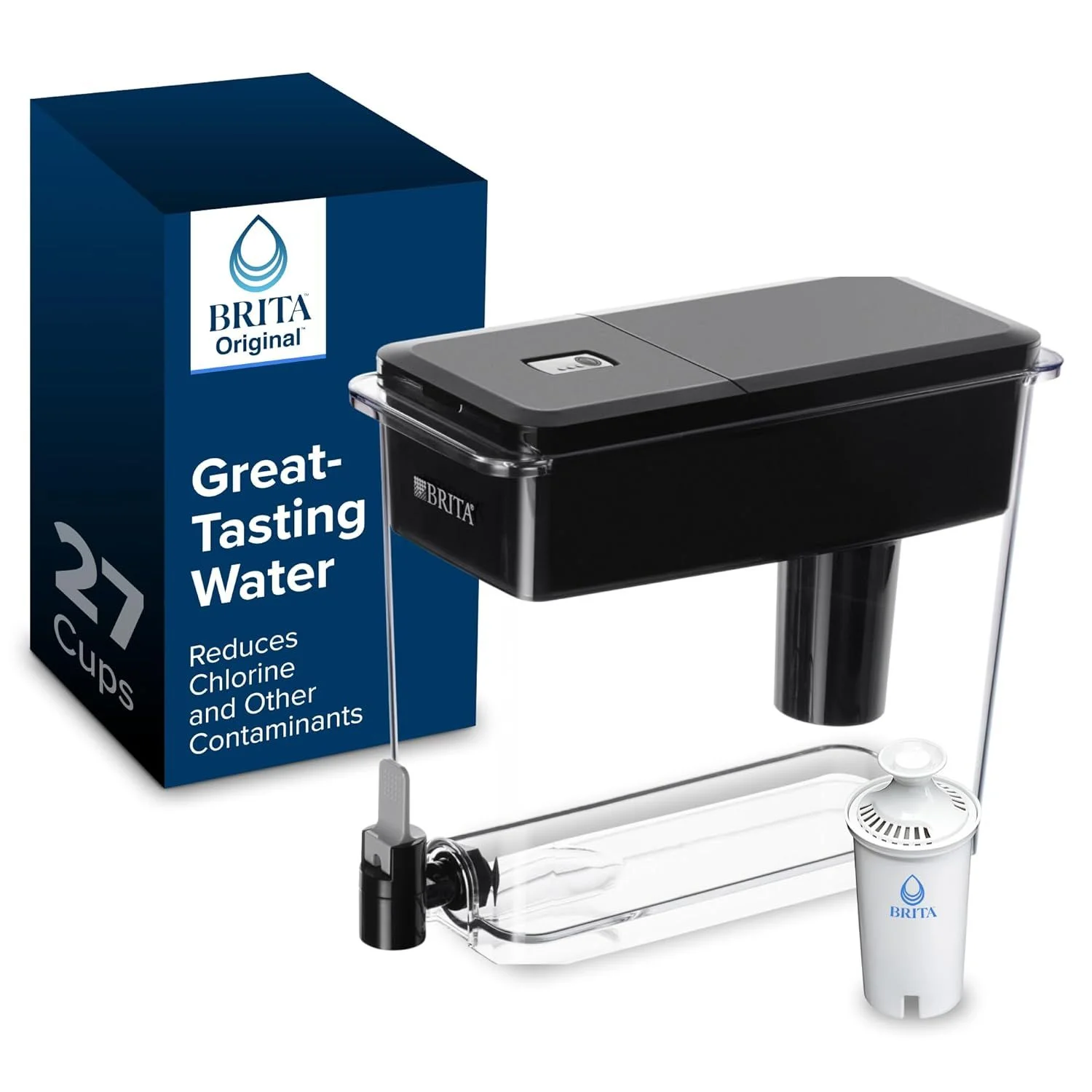
The Brita UltraMax dominates the large-capacity dispenser category with its 27-cup reservoir and precision-pour spigot. For families of four or more, this eliminates the constant refill cycle that makes smaller pitchers frustrating. Its 42,000+ reviews and 4.6-star rating reflect years of proven reliability that newer products have not matched.
The included Standard filter is adequate for chlorine reduction but basic. We strongly recommend upgrading to Brita Elite filters, which add lead, asbestos, and pharmaceutical reduction for a meaningful improvement in filtration quality. The UltraMax accepts both Standard and Elite cartridges.
The main downside is size. When full, this dispenser is heavy and takes up an entire refrigerator shelf. The spigot can drip if not fully closed. But for high-volume households that need simple, reliable filtration without any installation, the UltraMax remains the practical choice.
- Massive 27-cup capacity — serves families of 4+ without constant refilling
- Precision-pour spigot makes dispensing easy and mess-free
- Fits on refrigerator shelf or countertop
- Takes up significant refrigerator shelf space due to large footprint
- Heavy when full — difficult to move or pour from
How We Chose Our Picks
We evaluated each countertop and pitcher filter across five core criteria: filtration quality (what contaminants does it actually remove, with what certifications?), capacity and speed (how much water can it handle, and how quickly?), ongoing costs (what does a year of filter replacements actually cost?), ease of use (setup difficulty, maintenance, and daily convenience), and build quality (materials, durability, and design).
NSF certifications carry significant weight in our rankings. A filter certified to NSF 53 (health effects) or NSF 58 (reverse osmosis) has been independently verified by a third party. Marketing claims without NSF backing get treated with skepticism. We also calculate cost-per-gallon for every product, because a cheap filter with short cartridge life can cost more than a premium filter over a year.
Buying Guide: What to Look For in a Countertop Filter
Choosing the right countertop or pitcher filter depends on three factors: what contaminants you need to remove, how much water your household uses, and how much you are willing to spend on replacement filters over time.
Filtration technology matters most. Basic activated carbon (Brita Standard, Amazon Basics) handles chlorine taste, odor, and a handful of metals. Carbon block filters (Brita Elite) add lead and pharmaceutical reduction. Reverse osmosis (Bluevua) removes 95-99% of all dissolved solids including fluoride, PFAS, and heavy metals. Match the technology to your actual water quality concerns.
Calculate the annual filter cost, not just the sticker price. A $24 pitcher with $18 filters every 2 months costs about $108/year in cartridges. A $317 RO system with $70/year in filters costs less in year two. Consider the 2-year total cost of ownership when comparing options.
Check your local water quality report before buying. If your water is already clean (low TDS, no lead, no PFAS), a basic pitcher is all you need. Do not overspend on RO for water that is already safe. Save RO for water with measurable contamination.
Frequently Asked Questions
Do countertop water filters require any installation or plumbing?
Is a countertop RO system worth the extra money over a pitcher?
How often do I need to replace countertop filter cartridges?
Can a countertop filter remove lead and PFAS?
What is the best countertop filter for a family of four?
How do I know if my tap water needs more than a basic pitcher filter?
Our Recommendation
For most households, the Brita UltraMax 27-Cup Dispenser with Elite filter upgrades offers the best balance of capacity, filtration, and value. If you have specific concerns about lead, PFAS, fluoride, or high TDS, the Bluevua RO100ROPOT-UV delivers countertop reverse osmosis purification without any plumbing work. And for anyone just getting started with filtered water on a tight budget, the Amazon Basics 10-Cup Pitcher at under $24 is a no-risk entry point.
Check Top Pick on Amazon