Brita Elite vs ZeroWater: Which Pitcher Filter Is Better in 2026?
Quick Verdict: The Brita Elite ($29.78/2-pack) is the better choice for most households — it removes 99% of lead, lasts 120 gallons per filter, and costs about $0.12/gallon. ZeroWater ($59.99/4-pack) achieves deeper TDS reduction (0 ppm) and removes fluoride, but filters deplete 5-8x faster and cost roughly $0.60-1.00/gallon. Choose ZeroWater only if you need maximum TDS reduction or fluoride removal.
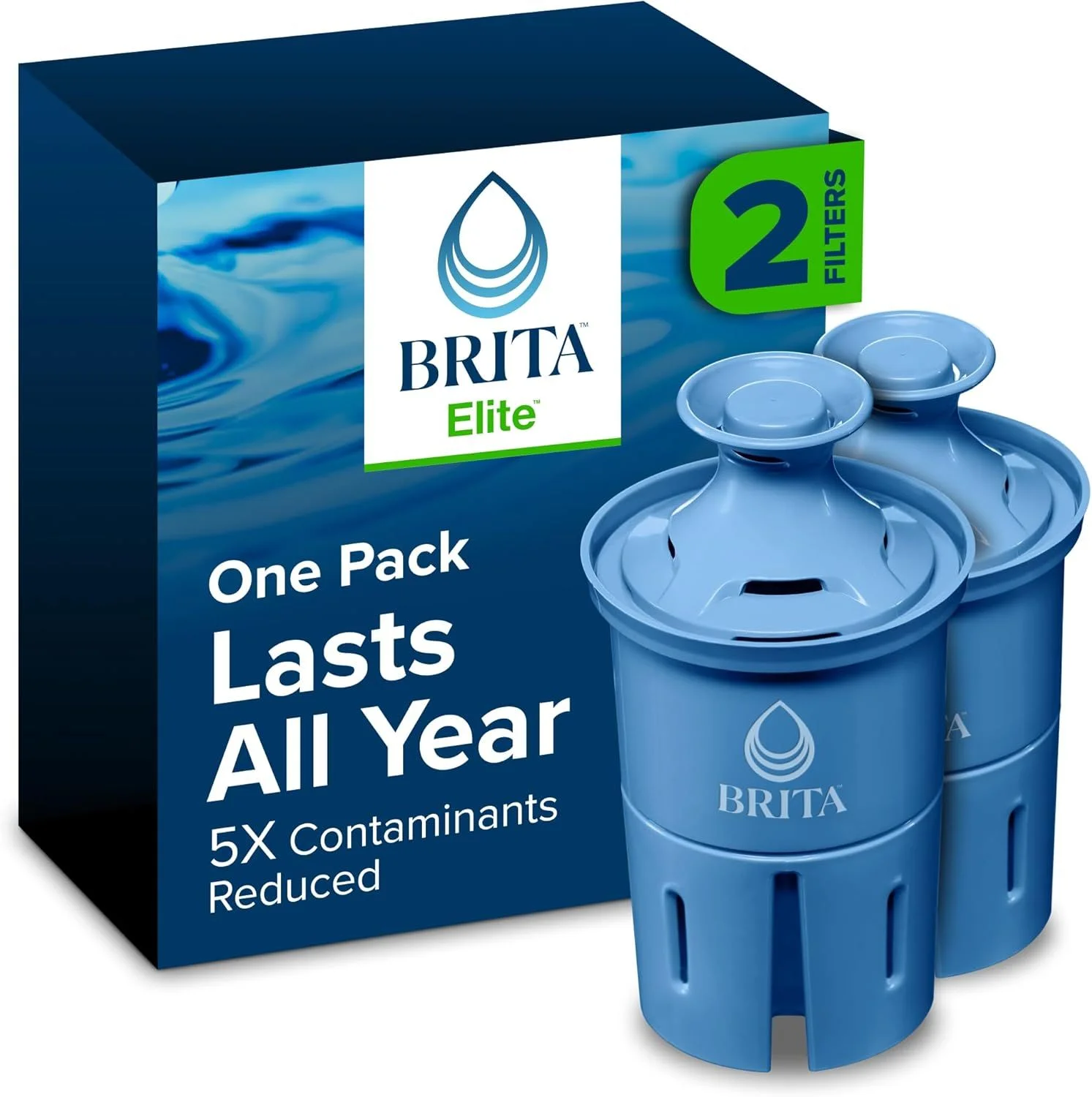
Brita Elite Replacement Filters (2-Pack)
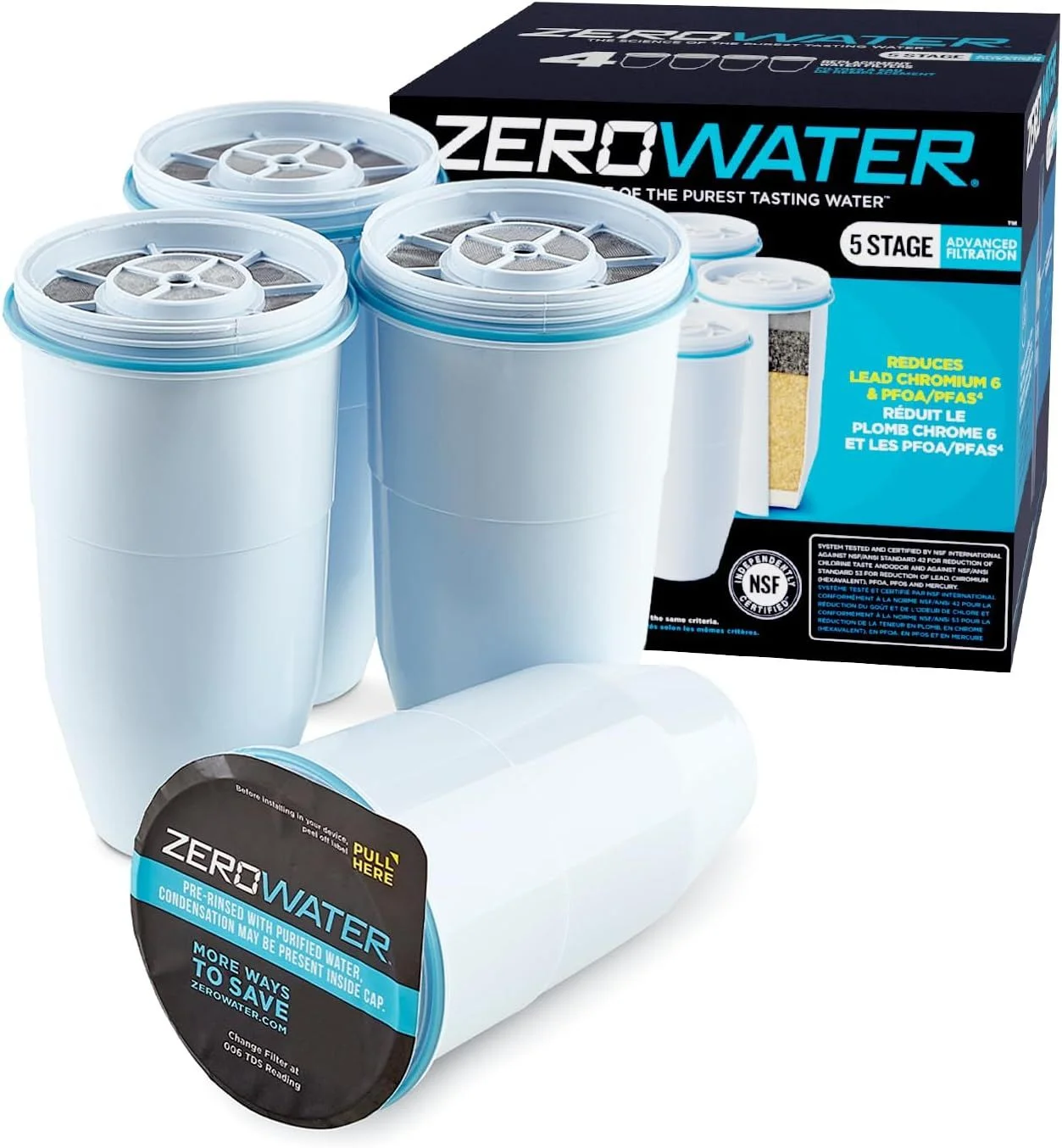
ZeroWater 5-Stage Replacement Filter (4-Pack)
At a Glance
| Feature | Editor's Pick Brita Elite Replacement Filters (2-Pack) | ZeroWater 5-Stage Replacement Filter (4-Pack) |
|---|---|---|
| Price | $25–$50 | $50–$100 |
| Pack Size | 2 | 4 |
| Capacity | 120 gallons per filter | ~15-25 gallons per filter (varies by source water TDS) |
| Certifications | NSF 42/53/401 | IAPMO (lead, chromium, PFOA, PFOS) |
| Filter Life | 120 gallons (~6 months per filter) | 15-25 gallons (2-8 weeks depending on TDS) |
| Filtration | Activated Carbon Block + Pleated Media | 5-Stage Ion Exchange + Activated Carbon |
| Check Price | Check Price |
Brita Elite and ZeroWater represent two philosophies: the Elite offers balanced, certified filtration at an economical per-gallon cost, while ZeroWater pursues laboratory-grade purity at the expense of filter life and ongoing costs. Both are significant upgrades over basic pitcher filters.
Category-by-Category Breakdown
Filtration Depth
ZeroWater achieves what no other pitcher filter can: 0 TDS water. Its 5-stage ion exchange system strips virtually every dissolved solid from water, including minerals, metals, salts, and chemicals. The Brita Elite removes 99% of lead and 30+ specific contaminants with NSF 42/53/401 certification, but does not achieve 0 TDS. For sheer filtration depth and measurable purity, ZeroWater is unmatched. However, many experts question whether 0 TDS is actually desirable for drinking water, since beneficial minerals are also removed.
Filter Life & Convenience
This is where the Brita Elite dominates. Each Elite filter handles 120 gallons — lasting roughly 6 months for a typical household. Each ZeroWater filter manages only 15-25 gallons before the ion exchange resin is exhausted, lasting 2-8 weeks depending on source water TDS. In high-TDS areas (200+ ppm), ZeroWater filters can die in under 2 weeks. The constant filter replacement is ZeroWater's biggest practical drawback.
Cost Per Gallon
The Brita Elite 2-pack at $29.78 yields 240 total gallons — about $0.12/gallon. The ZeroWater 4-pack at $59.99 yields 60-100 total gallons at best — roughly $0.60-1.00/gallon. Even at the optimistic end, ZeroWater costs 5x more per gallon than Brita Elite. Over a year, a family filtering 3 gallons/day would spend roughly $131 on Brita Elite versus $657-1,095 on ZeroWater. That is a substantial difference.
Certifications & Testing
The Brita Elite carries NSF 42/53/401 certification — the gold standard for independent testing, verified by NSF International. ZeroWater uses IAPMO certification for lead, chromium, PFOA, and PFOS. While both are legitimate certifications, NSF is more widely recognized and trusted in the water filtration industry. The Brita Elite's triple NSF certification covers a broader range of tested contaminants across three separate standards.
Taste
Taste is subjective, but most users report that Brita Elite water tastes more natural and pleasant because it retains some beneficial minerals. ZeroWater's 0-TDS output can taste flat, empty, or slightly acidic to some palates. Some people genuinely prefer ultra-pure water, but blind taste tests generally favor water with some mineral content. If you are used to spring water or mineral water, the Brita Elite will taste more familiar.
Who Should Get Which?
Get the Brita Elite Replacement Filters (2-Pack) if...
- You want the best balance of filtration, cost, and convenience
- You prefer changing filters every 6 months, not every few weeks
- Lead reduction and NSF certification are your priorities
- You prefer water with a natural mineral taste
Get the ZeroWater 5-Stage Replacement Filter (4-Pack) if...
- You need maximum TDS reduction — 0 ppm measured purity
- You want fluoride removal (Brita does not remove fluoride)
- You have specific PFOA/PFOS concerns and want verified removal
- You are willing to pay significantly more per gallon for the purest water