iSpring RCC7AK 6-Stage Reverse Osmosis System vs Waterdrop G3P600 Tankless Reverse Osmosis System: Which Is Better in 2026?
Quick Verdict: The iSpring RCC7AK ($198.78) is the best value in under-sink RO — it delivers 93-98% TDS reduction with alkaline remineralization for under $200. The Waterdrop G3P600 ($429) is the premium pick for those who need tankless space savings, 8x faster flow, and superior water efficiency. Both produce excellent water; the question is how much you value speed and space.
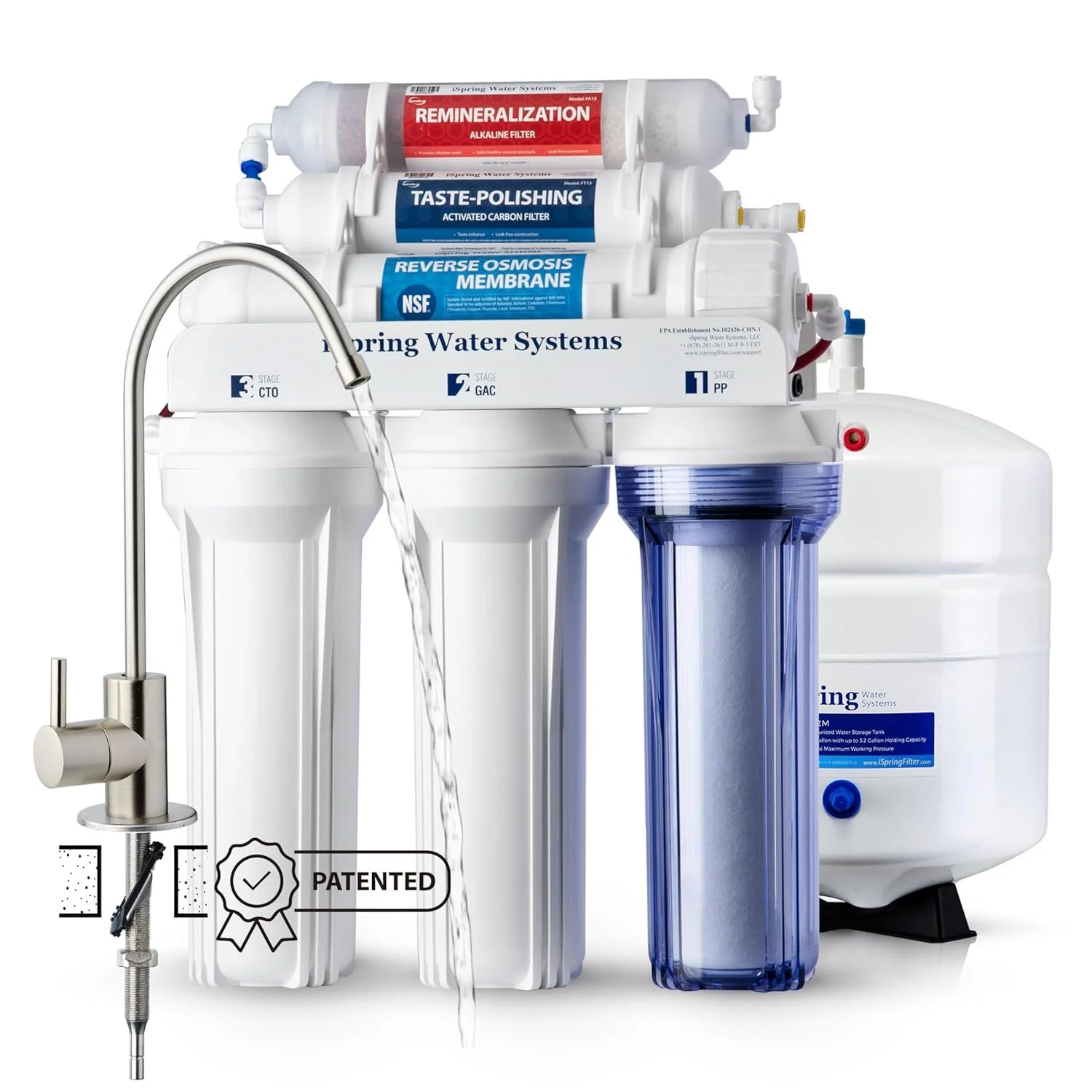
iSpring RCC7AK 6-Stage Reverse Osmosis System
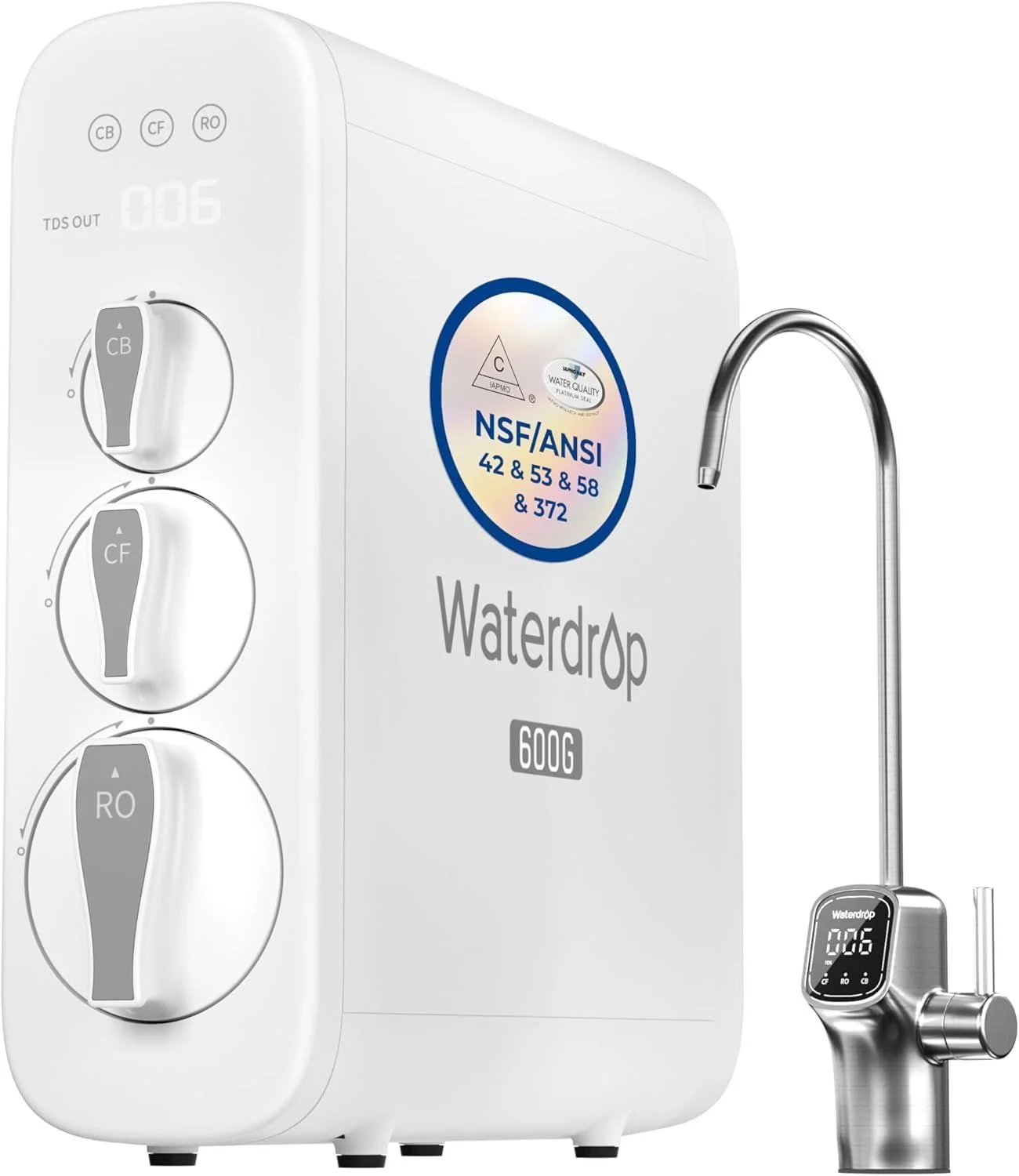
Waterdrop G3P600 Tankless Reverse Osmosis System
At a Glance
| Feature | Editor's Pick iSpring RCC7AK 6-Stage Reverse Osmosis System | Waterdrop G3P600 Tankless Reverse Osmosis System |
|---|---|---|
| Price Range | $100–$250 | $250–$500 |
| Stages | 6 | 8 |
| Technology | Sediment + GAC + CTO + RO Membrane + Alkaline Remineralization | PP + CTO + RO Membrane + Post Carbon (tankless) |
| Capacity | 75 GPD | 600 GPD |
| Flow Rate | 75 GPD | 600 GPD |
| Micron Rating | 0.0001 | 0.0001 |
| Filter Life | 6-12 months (pre/post filters), 2-3 years (RO membrane) | 6 months (CF filter), 12 months (MRO filter), 24 months (CB filter) |
| Check Price | Check Price |
The iSpring RCC7AK and Waterdrop G3P600 represent the two dominant approaches to home reverse osmosis: traditional tank-based value vs modern tankless performance. Both remove 99%+ of contaminants, but they differ dramatically in price, speed, space requirements, and water efficiency.
Category-by-Category Breakdown
Filtration Quality
Both systems use 0.0001-micron RO membranes and achieve 93-98% TDS reduction. The iSpring's 6-stage system includes sediment, GAC, CTO, RO membrane, and crucially, an alkaline remineralization stage that raises water pH and adds beneficial minerals back. The Waterdrop's 8-stage system uses PP, CTO, RO membrane, and post-carbon stages. The iSpring holds a broader NSF 58 certification, while the Waterdrop boasts NSF 42/53/58/372 — the most comprehensive certification set. In lab-grade purity, they are neck and neck, but the iSpring's remineralization gives it a taste edge.
Speed & Flow Rate
This is the Waterdrop's standout advantage. At 600 GPD, the G3P600 produces water 8 times faster than the iSpring's 75 GPD. The Waterdrop delivers RO water on demand — no waiting for a tank to refill. The iSpring fills its pressurized tank over time and relies on stored water for instant access, but if you drain the tank, you will wait. For households that use a lot of filtered water for cooking and drinking, the Waterdrop's instant production is transformative.
Price & Value
At $198.78, the iSpring RCC7AK is one of the best deals in home water filtration. You get a complete 6-stage RO system with alkaline remineralization backed by 18,000+ reviews. The Waterdrop at $429 is more than double the price. While the Waterdrop offers real advantages in speed and efficiency, the iSpring's price-to-performance ratio is genuinely remarkable. Annual filter costs also favor the iSpring at roughly $60-80 versus $100-130 for the Waterdrop's proprietary cartridges.
Space & Installation
The Waterdrop's tankless design is a major advantage for kitchens with limited under-sink space. The iSpring requires room for both the filter assembly and a 3-4 gallon pressurized storage tank, consuming most of the cabinet. The Waterdrop's compact unit takes up roughly half the space. However, the Waterdrop requires an electrical outlet under the sink for its booster pump — which not every kitchen has. The iSpring operates on water pressure alone with no electricity required.
Water Efficiency
The Waterdrop dominates here with its 2:1 pure-to-drain ratio — for every 2 gallons of purified water, only 1 goes to waste. The iSpring's 1:3 ratio means 3 gallons are wasted for every 1 gallon of purified water. That is a 6x difference in water efficiency. For environmentally-conscious buyers or those in drought-prone regions, this alone could justify the Waterdrop's premium. A family filtering 3 gallons daily would waste roughly 1,095 extra gallons per year with the iSpring.
Who Should Get Which?
Get the iSpring RCC7AK 6-Stage Reverse Osmosis System if...
- You want the best RO water quality for under $200 — unbeatable value
- You prefer alkaline remineralized water with improved taste and pH
- You have adequate under-sink cabinet space for the tank system
- You do not have an electrical outlet under your sink
Get the Waterdrop G3P600 Tankless Reverse Osmosis System if...
- Cabinet space is limited and you need a compact, tankless system
- You want instant RO water on demand — no waiting for tank refills
- Water efficiency matters to you (2:1 vs 1:3 pure-to-drain)
- You want the smart LED faucet with real-time TDS monitoring