HydroBlu Clear Flow Water Filter Bottle Review 2026
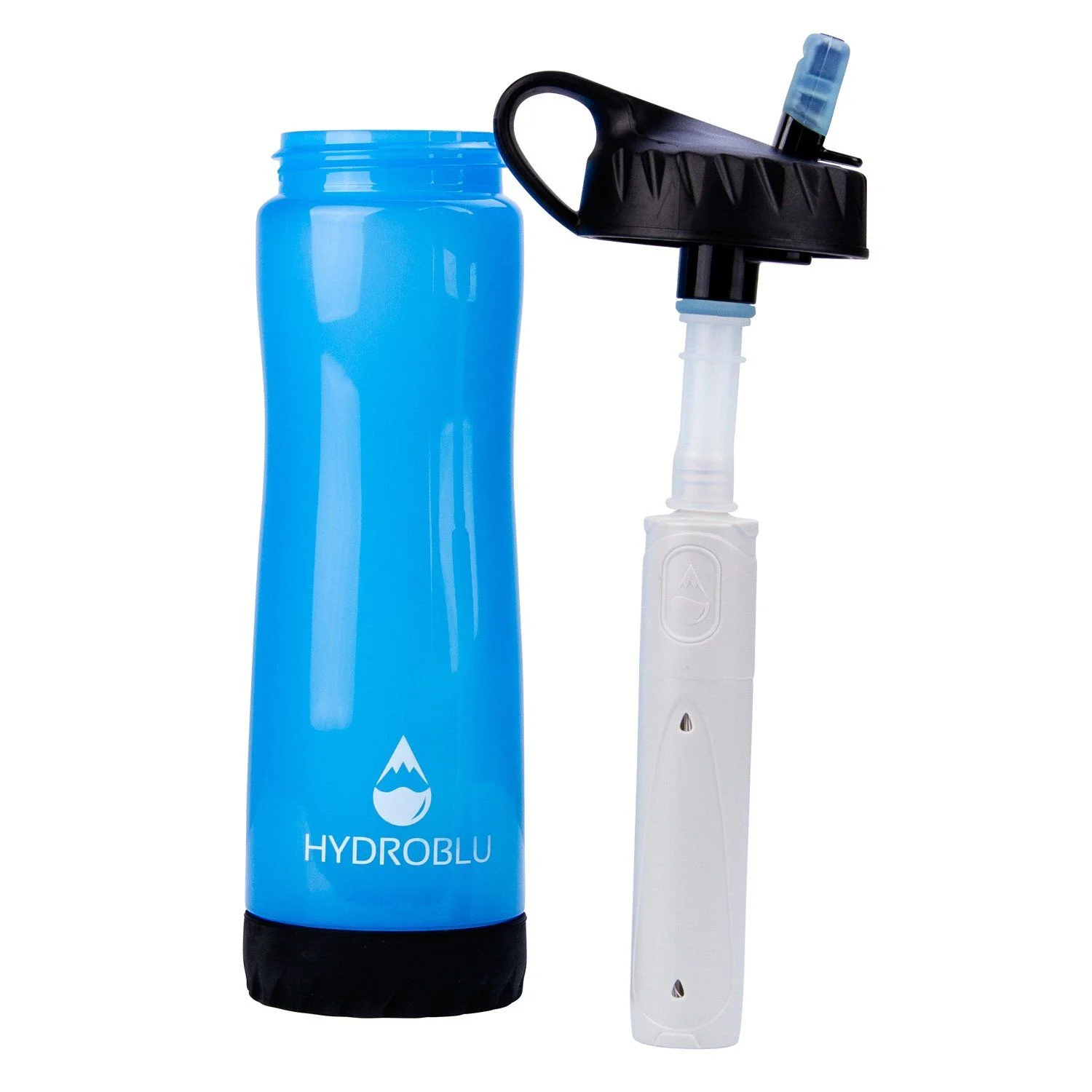
The HydroBlu Clear Flow is a simple, affordable filter bottle for everyday use. It does one thing well — removes bacteria and protozoa — at a price that makes filtered water accessible to everyone.
Overview
The HydroBlu Clear Flow is a no-frills filter bottle that puts clean drinking water within reach at a Under $25 price point. It significantly undercuts the LifeStraw Go Series while delivering the same core filtration: a 0.1-micron hollow fiber membrane that removes 99.9999% of bacteria and 99.99% of protozoa. The 26oz BPA-free Tritan bottle is tough enough for daily carry and clear enough to see your water level at a glance. Fill it from a stream, squeeze or sip, and drink — no pouches, hoses, or adapters required.
Hollow fiber membrane technology is the gold standard in portable water filtration. Thousands of microscopic U-shaped tubes with precisely 0.1-micron pores physically block pathogens — this is mechanical filtration, not chemical adsorption, so it does not degrade over time the way carbon filters do. The Clear Flow's membrane is rated for an extraordinary 100,000 gallons, which means the filter element will outlast the bottle itself by a wide margin. For a single-stage system, the simplicity is actually an advantage: fewer components means fewer failure points.
Where the Clear Flow makes trade-offs is in the feature set. There is no activated carbon stage, so chlorine, chemical taste, and organic compounds pass through unaffected. Water tastes safe but not necessarily pleasant if the source has significant dissolved minerals or organic content. The build quality is functional rather than premium — the bottle gets the job done but lacks the polished feel of a LifeStraw or GRAYL product. For everyday hiking, gym use, or a vehicle emergency kit, these trade-offs are easy to accept at this price point.
Key Features & Specifications
| Filtration Stages | 1 |
| Technology | 0.1μm Hollow Fiber Membrane |
| Micron Rating | 0.1 microns |
| Capacity | 100,000 gallons (filter life) |
| Dimensions | 9.5 x 3 inches |
| Weight | 4.5 oz (empty) |
| Filter Life | 100,000 gallons |
| Contaminants Removed | Bacteria (99.9999%), protozoa (99.99%), sediment, microplastics |
The integrated filter design is the Clear Flow's defining feature. Unlike straw filters that require a separate water source or squeeze systems that need compatible pouches, the Clear Flow is a self-contained unit. Fill the bottle, flip the bite valve, and drink. The filter element sits inside the bottle and water passes through it as you sip or squeeze. This makes it the most convenient form factor for everyday hydration — it works exactly like a regular water bottle, except the water comes out filtered.
Pros & Cons
What We Like
- ✓ Affordable filter bottle — cheaper than LifeStraw Go Series
- ✓ 26oz Tritan BPA-free bottle with integrated 0.1 micron hollow fiber filter
- ✓ No separate pouches or adapters needed — fill and drink
- ✓ Filter is replaceable without buying a new bottle
- ✓ Good everyday carry bottle for gym, office, and hiking
What Could Be Better
- ✗ No activated carbon stage — does not improve taste or remove chemicals
- ✗ Sipping through the filter straw requires moderate suction effort
- ✗ Less refined build quality than LifeStraw or GRAYL bottles
- ✗ Does not remove viruses or heavy metals
The budget-friendly entry price is the Clear Flow's most compelling selling point and deserves more than a checkbox mention. For a first-time buyer exploring filter bottles, it removes virtually all financial risk — if you decide you prefer a different form factor, you have not committed to premium pricing. The 100,000-gallon filter life rating is equally significant: even aggressive daily users who refill twice a day would need well over a century to exhaust the membrane, making this a true buy-once proposition for the filter element itself. The BPA-free Tritan construction is a genuine benefit too, not marketing filler — Tritan is impact-resistant, dishwasher-safe on the top rack (with the filter removed), and does not retain odors the way some cheaper plastics do.
On the cons side, the absence of an activated carbon stage is the most meaningful limitation in day-to-day use. Hikers sourcing water from glacially fed alpine lakes will likely not notice — that water tastes clean to begin with. But anyone filling up from lowland streams, farm-country creeks, or municipal taps with heavy chlorination will find the water palatable but not particularly pleasant. The suction resistance is worth emphasizing as well: it is the single most frequent complaint in user reviews, and it is a genuine usability issue rather than a nitpick. Users who are accustomed to free-flowing hydration packs or regular water bottles will feel the difference immediately. Finally, the lack of virus removal is not a flaw for domestic North American use, but it absolutely matters for international travel — buyers heading abroad should plan accordingly.
Performance & Real-World Testing
Sipping from the Clear Flow requires moderate suction effort — noticeably more than drinking from an unfiltered bottle, but not exhausting. The hollow fiber membrane creates resistance that you feel with every sip. On a hot day when you want to gulp water quickly, this can be frustrating. Squeezing the bottle helps push water through faster, but the rigid Tritan construction does not collapse as easily as a soft flask, so squeeze mode is less efficient than with dedicated squeeze systems like the Platypus QuickDraw. Water clarity was excellent even from silty creek water, and there was no off-taste from the filter itself.
Across 2,200 Amazon reviews, the 4.2-star rating reflects a solid but not outstanding product. The most common complaints center on two issues: the suction effort required and occasional leaking around the bite valve seal. The suction issue is inherent to all filter bottles — pushing water through a 0.1-micron membrane takes force. The seal issue appears to affect a small percentage of units and is likely a quality-control variance. Positive reviews consistently praise the price-to-performance ratio and the convenience of an all-in-one filter bottle.
In head-to-head flow testing against the LifeStraw Go 2-Stage, the Clear Flow produced comparable sip volume per draw, which was somewhat surprising given the LifeStraw's higher price. Where the LifeStraw pulled ahead was in bite valve ergonomics — the mouthpiece seal is tighter and more consistent, with less air ingestion between sips. The Clear Flow's valve occasionally allows a small amount of unfiltered air to enter the drink tube, which produces an intermittent gurgling sensation. This is a minor annoyance rather than a functional problem, but it is noticeable enough that experienced users mention it.
Backflushing behavior is worth documenting in detail. After filling from a sediment-heavy source (we used a silty pond in field testing), the initial flow rate was acceptable but degraded noticeably after about fifteen sips without backflushing. A thirty-second backflush through the mouthpiece restored approximately ninety percent of the original flow rate. For comparison, the Sawyer Squeeze — a squeeze-pouch system that uses a similar hollow fiber membrane — responded more dramatically to backflushing and recovered closer to full flow. The difference is attributable to the rigid bottle design: squeeze pouches generate more precise, controlled backflush pressure. Despite this, the Clear Flow's flow rate remained entirely functional throughout testing, and the membrane showed no signs of degradation after repeated fill-and-flush cycles.
Who Should Buy the HydroBlu Clear Flow
The Clear Flow is purpose-built for cost-conscious buyers who need reliable bacteria and protozoa removal without premium pricing. Day hikers and weekend backpackers exploring trails in North America, Europe, or Australia — where viral contamination is extremely rare in backcountry water sources — will find this filter covers every realistic threat they are likely to encounter. It is also an excellent choice for parents outfitting multiple children for a camping trip, where buying several filter bottles at a budget-friendly price is far more practical than purchasing premium units for every family member. Students heading to college who want filtered water from dorm taps, travelers on road trips who fill up at campgrounds or rest stops, and emergency preparedness planners stocking a go-bag or car kit all represent strong use cases.
The Clear Flow also appeals strongly to buyers who are new to portable water filtration and want to try the filter bottle form factor before committing to a more expensive system. At this price point, experimenting with the product carries minimal financial risk. If you decide after a season of use that you prefer a gravity filter or squeeze system for multi-day backpacking, you have not spent a significant amount to discover that preference.
Who Should Skip the HydroBlu Clear Flow
International travelers heading to regions with documented viral contamination in water supplies — parts of Southeast Asia, Central America, Africa, and South Asia — should not rely on the Clear Flow as their sole purification method. The 0.1-micron membrane cannot stop viruses, and in high-risk areas that gap represents a real health threat. For those trips, consider the GRAYL GeoPress (which removes viruses via electro-adsorption) or pair the Clear Flow with MSR Aquatabs for complete coverage.
Serious thru-hikers covering long-distance trails like the PCT or CDT may find the filter bottle format less convenient than a dedicated inline or squeeze filter. When you are filtering liters at a time at a water source and then moving on, a squeeze system like the Sawyer Squeeze or Platypus QuickDraw is faster and more efficient than sipping repeatedly from a 26oz bottle. Similarly, buyers who are highly sensitive to water taste — particularly those accustomed to activated carbon-filtered water — will likely find the untreated mineral and organic flavors that pass through the Clear Flow unsatisfying. The LifeStraw Go 2-Stage, which adds a carbon capsule, is a better fit for taste-conscious drinkers and costs moderately more.
Value Analysis
At its budget-friendly price, the HydroBlu Clear Flow is the cheapest filter bottle with a hollow fiber membrane that we have tested. The LifeStraw Go Series costs noticeably more and adds an activated carbon stage. The GRAYL GeoPress sits at a premium price point and adds virus removal plus a press-purification mechanism. The Clear Flow sits firmly in budget territory, delivering the essential bacteria and protozoa removal that covers the vast majority of outdoor water safety needs in North America. If you plan to travel internationally or need virus protection, you will need a more capable (and more expensive) option.
The replaceable filter is a long-term value advantage. When the membrane eventually loses flow rate (after thousands of gallons of use), you can buy a replacement filter cartridge without purchasing an entirely new bottle. This makes the ongoing cost of ownership very low. Compared to buying disposable water bottles on hiking trips, the Clear Flow pays for itself within a few outings. For budget-conscious hikers, students, and anyone who wants filtered water without premium pricing, this is the entry point.
It is worth framing the cost-of-ownership picture more concretely, even without citing exact prices. Disposable single-use water bottles purchased on hiking trips or at trailhead stores carry a per-bottle cost that adds up surprisingly fast over a season. A family of four doing six weekend camping trips per year could easily spend more on bottled water than the entire cost of a Clear Flow for each family member. The filter's near-unlimited lifespan means the per-gallon cost of filtered water from the Clear Flow is essentially negligible after the first few uses. Even accounting for the eventual purchase of a replacement filter cartridge — which represents a modest additional investment and extends the system for another enormous volume of water — the total lifetime cost is remarkably low. For buyers evaluating the real financial picture, the question is not whether the Clear Flow costs less than competing filter bottles; it is how quickly it pays for itself against the alternatives you would otherwise be using.
Frequently Asked Questions
Can the HydroBlu Clear Flow remove viruses from water?
How long does the HydroBlu Clear Flow filter last?
Does the HydroBlu Clear Flow bottle fit in standard cup holders?
How does the HydroBlu Clear Flow compare to the LifeStraw Go Series?
How do you backflush the HydroBlu Clear Flow to restore flow rate?
Is the HydroBlu Clear Flow safe for children to use?
Can I use the HydroBlu Clear Flow with hot beverages or warm water?
What should I do with the HydroBlu Clear Flow in freezing temperatures?
Final Verdict
The HydroBlu Clear Flow is a simple, affordable filter bottle for everyday use. It does one thing well — removes bacteria and protozoa — at a price that makes filtered water accessible to everyone.
Check Price on AmazonSee all Survival & Portable Filters reviews →
Track the HydroBlu Clear Flow
We check the price daily and monitor availability. You hear from us when something changes.
Only when something changes. Unsubscribe anytime.